The Changing Face of Walthamstow: The Stories Behind E17’s Streets
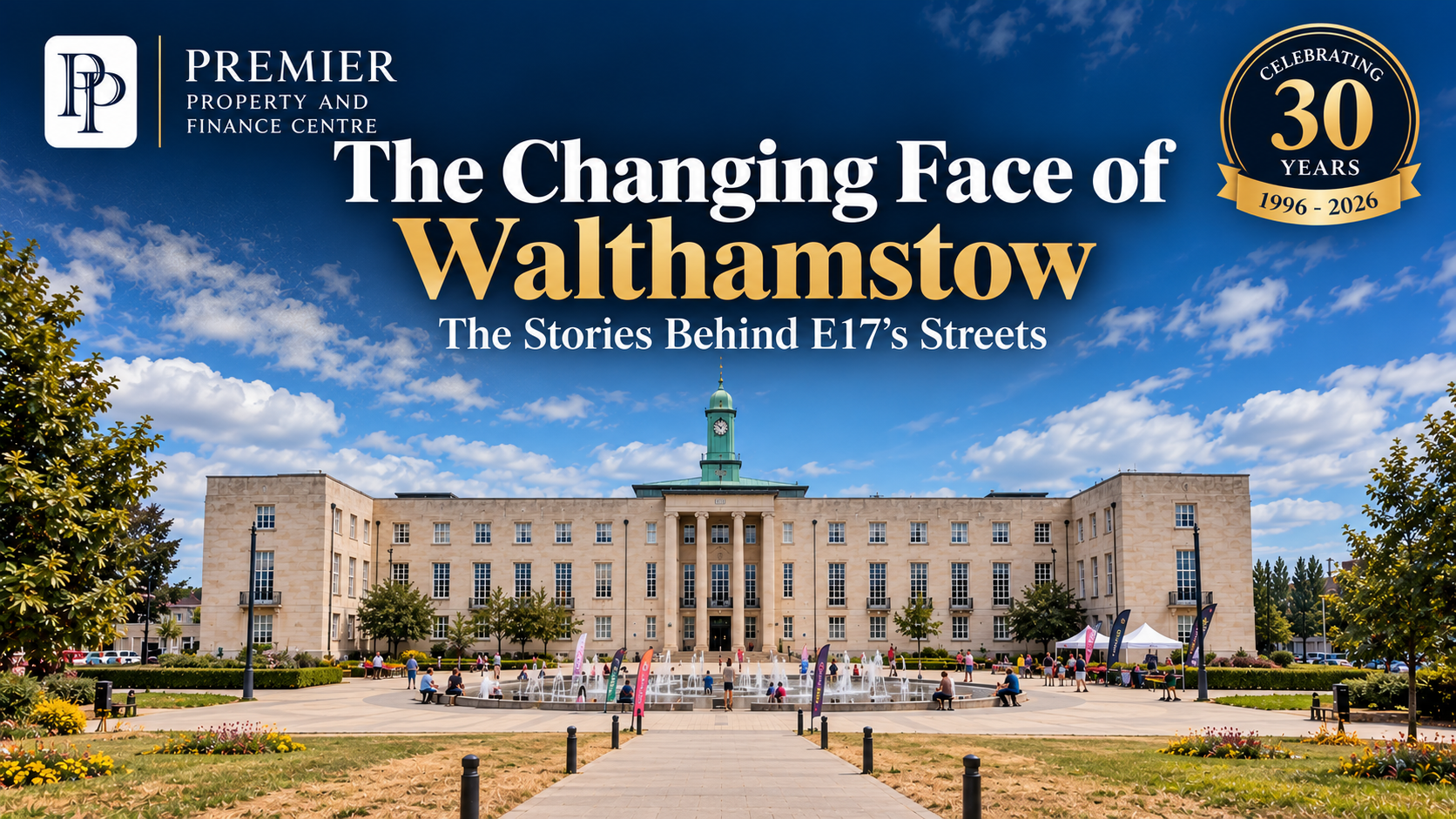
The Changing Face of Walthamstow: The Stories Behind E17’s Streets
From the Old Walthamstow Arcade to The Scene, Historic Cinemas and Modern Developments — How E17 Continues to Evolve
Walthamstow has always been a place with character. From its traditional market and Victorian residential streets to its independent businesses and historic landmarks, the area has a personality that is difficult to replicate.
But for anyone who has lived or worked in Walthamstow for many years, the changes are impossible to ignore.
Buildings that were once familiar parts of everyday life have disappeared or taken on new identities. Former commercial sites have become modern apartments, established landmarks have been restored, and new businesses have brought a different energy to the town centre.
Yet much of what makes Walthamstow distinctive remains. The story of E17 is not simply one of old buildings being replaced by new ones. It is about how a neighbourhood continues to adapt while holding on to the character that makes it home.
The Walthamstow Arcade: From Small Shops to The Scene
One of the clearest examples of Walthamstow’s transformation can be found near the junction of Hoe Street and the High Street.
For many long-standing local residents, the old Walthamstow Arcade will be a familiar name.
It was a small shopping arcade containing a collection of individual shops and businesses. Visitors could walk through the arcade, browsing the different premises tucked inside.
It was the kind of place that formed part of everyday town-centre life, particularly for people who regularly visited Walthamstow Market or the surrounding shops.
Today, the site looks very different.
The former arcade has been replaced by The Scene, a modern development combining residential apartments with restaurants and a cinema.
Where smaller shops once occupied the arcade, visitors now find a building with a distinctly modern appearance. Restaurants including Nando’s and Five Guys, alongside the cinema, have made this part of the town centre a destination for dining and entertainment.
The transformation is striking, not simply because the buildings have changed, but because the way the space is used has changed too. What was once a traditional shopping arcade is now a combination of homes, restaurants and cinema entertainment.
For anyone who remembers the old arcade, it is a particularly vivid reminder of how much Walthamstow has evolved.
The Shopping Centre: A Familiar Place With a New Identity
Not every change in Walthamstow has involved demolishing an old building.
The shopping centre near Walthamstow Central is a good example.
Long-standing residents may remember it as Selborne Walk, while others will know it as The Mall Walthamstow.
Today, it operates under the name 17&Central.
Although its branding and appearance have changed over the years, the shopping centre remains a recognisable part of Walthamstow’s town centre.
For generations of shoppers, it has been a familiar destination alongside the market, Hoe Street and the surrounding retail streets.
Its evolution reflects a different kind of change: an established place adapting its identity to suit a changing high street.
From the EMD Cinema to Soho Theatre Walthamstow
Few buildings capture Walthamstow’s history quite like the former EMD cinema on Hoe Street.
The site has a long association with entertainment, having been home to earlier venues before the impressive Granada cinema building took shape.
With its elaborate interior and distinctive architecture, the Granada became one of Walthamstow’s most memorable landmarks.
Over the years, it welcomed cinema audiences and live performances, becoming an important part of the area’s cultural life.
Later known as the EMD cinema, the building eventually closed, leaving uncertainty about what would happen to such a significant local landmark.
For many residents, its closure represented the possible loss of an important piece of Walthamstow’s identity.
Fortunately, the building’s story did not end there.
Following an extensive restoration, it has reopened as Soho Theatre Walthamstow, once again welcoming audiences for live entertainment.
What makes this transformation particularly special is that the building has not simply been replaced. Its historic character has been preserved while giving it a new purpose.
In a town centre where some older sites have disappeared entirely, the former Granada stands as an example of how the past can remain part of Walthamstow’s future.
Blackhorse Road: An Area Reinventing Itself
Away from the town centre, Blackhorse Road tells another story of change.
Historically associated with industry, workshops and commercial premises, the area has gradually developed a new identity.
Former industrial spaces have given way to residential developments, while creative businesses, independent venues and breweries have contributed to the area’s growing reputation.
Today, modern apartment buildings sit alongside reminders of Blackhorse Road’s industrial heritage.
The contrast is noticeable.
Where the neighbourhood was once primarily associated with manufacturing and commercial activity, it now offers a mixture of homes, workplaces and leisure destinations.
Yet its industrial past remains an important part of its character. Rather than becoming a completely different place, Blackhorse Road is an example of an established neighbourhood finding new uses for its spaces.
Waltham Forest Town Hall and the Changing Surroundings
Another significant transformation can be seen around Waltham Forest Town Hall on Forest Road.
The historic Town Hall remains one of the borough’s most recognisable civic buildings, with its imposing architecture and established place in local life.
However, the surrounding area has been undergoing substantial change.
The creation of Fellowship Square has introduced a new public space around the Town Hall, while the wider regeneration programme includes new homes and improvements to the surrounding environment.
The contrast between the historic civic building and the modern development around it illustrates how Walthamstow continues to evolve.
It also shows that regeneration is not limited to the town centre. Established parts of the borough are being adapted to accommodate new housing, public spaces and changing community needs.
The Residential Streets That Still Define Walthamstow
Despite the arrival of larger developments, much of Walthamstow’s residential character remains remarkably familiar.
Victorian and Edwardian terraces continue to line streets across E17, with their bay windows, decorative brickwork, tiled entrances and traditional rooflines.
These properties tell the story of an earlier period of growth, when Walthamstow developed from a collection of smaller settlements into an increasingly established residential area.
Many of the homes have changed considerably inside.
Extensions, loft conversions and modern renovations have adapted older properties for contemporary living, often while preserving their original appearance from the street.
Areas such as Walthamstow Village, Wood Street and the residential roads surrounding Hoe Street continue to demonstrate how different periods of development have shaped the neighbourhood.
This mixture of established housing and newer apartment buildings is now part of Walthamstow’s identity.
The old and new are not separate stories. They exist alongside one another, sometimes within just a few streets.
What Makes Walthamstow Still Feel Like Walthamstow?
With so much redevelopment, it is natural to wonder what gives a place its lasting identity.
For Walthamstow, the answer is not simply its buildings.
The market remains a defining feature of the town centre. Independent shops continue to operate alongside larger national businesses. Historic residential streets retain their character, while newer developments bring different types of homes and facilities.
Some changes have been welcomed enthusiastically. Others have prompted debate about the loss of familiar buildings and the changing appearance of the area.
That is understandable.
Places are not only remembered for their architecture, but for the experiences people associate with them.
Someone who remembers walking through the old Walthamstow Arcade may see The Scene differently from a younger resident who has only ever known the modern development.
Neither perspective is wrong. They simply reflect different chapters in the same neighbourhood’s history.
And perhaps that is what makes the story of Walthamstow particularly interesting. It continues to change, but every generation develops its own memories of the place.
A Neighbourhood That Never Stands Still
At Premier Property & Finance Centre, we have been part of Walthamstow’s property landscape for 30 years.
During that time, we have watched familiar buildings disappear, new developments emerge and established neighbourhoods gradually take on different identities.
From the former Walthamstow Arcade to The Scene, from the EMD cinema to Soho Theatre Walthamstow, and from Blackhorse Road’s industrial past to its growing residential community, the changes have been substantial.
Yet walk along Walthamstow Market, through its established residential streets or past its historic landmarks, and there is still a strong sense of the area’s character.
Walthamstow has never been a place that stands still.
Its buildings, businesses and communities will continue to evolve, just as they have for generations.
And while the streets may look different in another 30 years, the stories behind them will remain part of what makes E17 special.
Get notified of news and insights
Stay up to date with the latest news, trends and insights related to renting your property in Waltham Forest and the UK.
A straightforward way to let in Walthamstow
Start with a free valuation or speak to our local team who understands Walthamstow, communicates clearly, and helps landlords feel more confident about letting their property.